Mike’s Vintage Computer Collection
(Last update 1/6/26)


The systems are listed in order of age (based upon date made, not when I acquired them).
Unlike the 'Current' and 'Obsolete' computer pages, the machines on this page are sorted from the oldest to the newest.


The specifications for each system are specific to the units I own and are not meant to be a
comprehensive
list of all of the available configurations offered by the manufacturer.
 

All of these systems were still functional when last tested, unless noted otherwise.
 

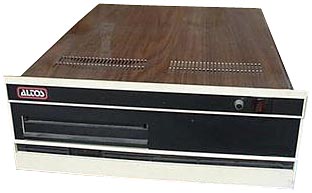
Two (2) Altos MP/M (multi-user CP/M) systems.
Built circa 1978; purchased used in 1986.


           CPU:  Zilog Z80A 4 MHz


           RAM:  From 32 KB to 208 KB


      Storage:  Two 8" 1 MB floppy drives


Networking:  Four RS232 serial ports for ASCII terminals


            O/S:  Digital Research CP/M or MP/M


Up to four users could be accommodated on these machines, using terminals; each user got something like a 48K memory space.  It has been difficult to pin-point the exact age of these machines; Altos Computer Systems was founded in 1976, and these appear to be one of their early models since it uses 8” floppy disks, a format that by 1980 was considered to be obsolete.  In the machines I have, Altos mounted the floppy drives upside down, apparently by accident.  The previous owner of these machines learned to always insert their floppies upside down to match!  I have a small supply of 8” floppies that came with these machines. 

 
Acquired with these machines were two Hazeltine terminals and two heavy-duty Texas Instruments model 820 line printers.  The Hazeltine terminals eventually stopped working and I had to junk them; the printers kept  working so I still have them. Amazingly almost thirty years later it was still possible to get replacement ribbons and service for these printers.

Historical Notes:  Altos Computer Systems was one of the earliest companies making business-oriented microcomputers. Founded in 1976, it peaked in the mid-Eighties with a popular line of Xenix-based multi-user systems.  The company was sold to Acer America in 1990.  The Altos name is still being used for Acer’s line of file servers.

The CP/M (Control Program for Microcomputers) operating system was developed in the early Seventies, almost a decade before MS-DOS. Until MS-DOS took over, CP/M was the business operating system for microcomputers.  Many popular business applications such as WordStar and dBase were first published for the CP/M platform.  Apple developed a Z80 card for the Apple II so it could run CP/M business applications; Commodore took the approach of building in a Z80 CPU in addition to the usual 6510 microprocessor in some of it’s more advanced machines (see the SX-64 and C128, below).
 

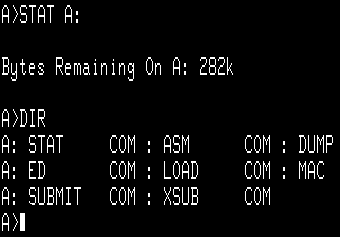
A typical CP/M screen shot is at right.

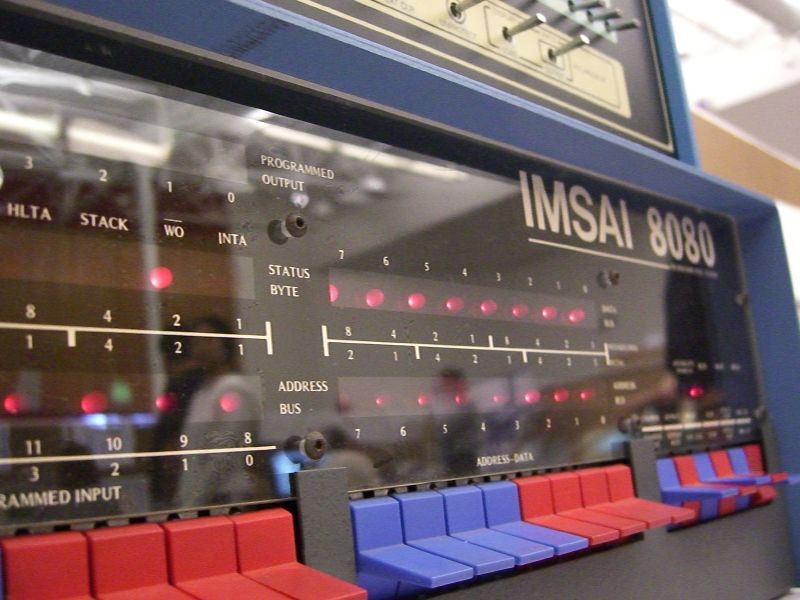
In popular culture, a CP/M machine (the IMSAI 8080) was featured in the 1983 movie WarGames.


(An example of Altos's "Packed With Fresh Ideas" advertising)
Larger version


Atari 800 System. 
Built 1979, Purchased used in 2002.
 

           CPU:  MOS Technology 6502 1.79 MHz

           RAM:  48 KB (max capacity)


      Storage:  Two internal cartridge slots.

                      Atari 810 external 5.25" floppy drive 180 KB per disk

                      (90 KB per side).
                      Atari
410 external cassette tape drive, aprox. 100 KB

                      per 60-minute tape.


    Graphics:  320 x 192 mono or 160 x 192 x 4 colors


         Audio:   Mono, up to 16-bit


Connectivity: RGB and TV-RF output, bus expansion slots, four joystick ports.


            O/S:  Atari DOS (proprietary)


Along with my model 400s this is the oldest personal computer in my collection.

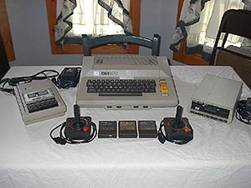
The photo at upper right shows the system and peripherals I purchased.  The 800 was the high-end system to the lower-end 400 model (see below). Unlike the 400, the more expensive 800 featured a full-size regular keyboard and more memory.  With the optional diskette drive this system cost around $1,600 in 1979 dollars.


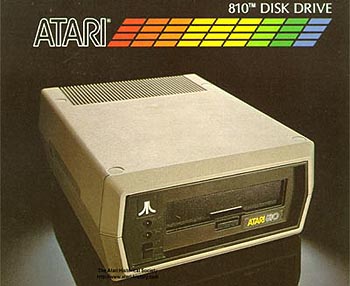
The photo at right from the Atari Museum web site shows a closer view of the external floppy drive. This drive was expensive ($600) but much faster than the cassette drive for storage.


One of the big motivations for building this collection of antique computers is to able to finally play with the many cool machines I couldn't afford back in the day; these first Atari computers were high on my list of "wish I could have" machines.
    
I haven't been able to find definitive info on the capacity limit of the ROM (Read-Only Memory) cartridges. Since the 6502 CPU could only address 64 KB of memory, I'm guessing that was the maximum storage capacity of a compatible ROM cartridge.  Due to the high cost of that much memory in 1979, most cartridges probably contained only 8 to 16 KB.


     Additional Links:
                Atari Museum page on the Atari 800
                Oldcomputers.net page on the Atari 800
                Atari Source - Hardware page
                Inside Atari DOS


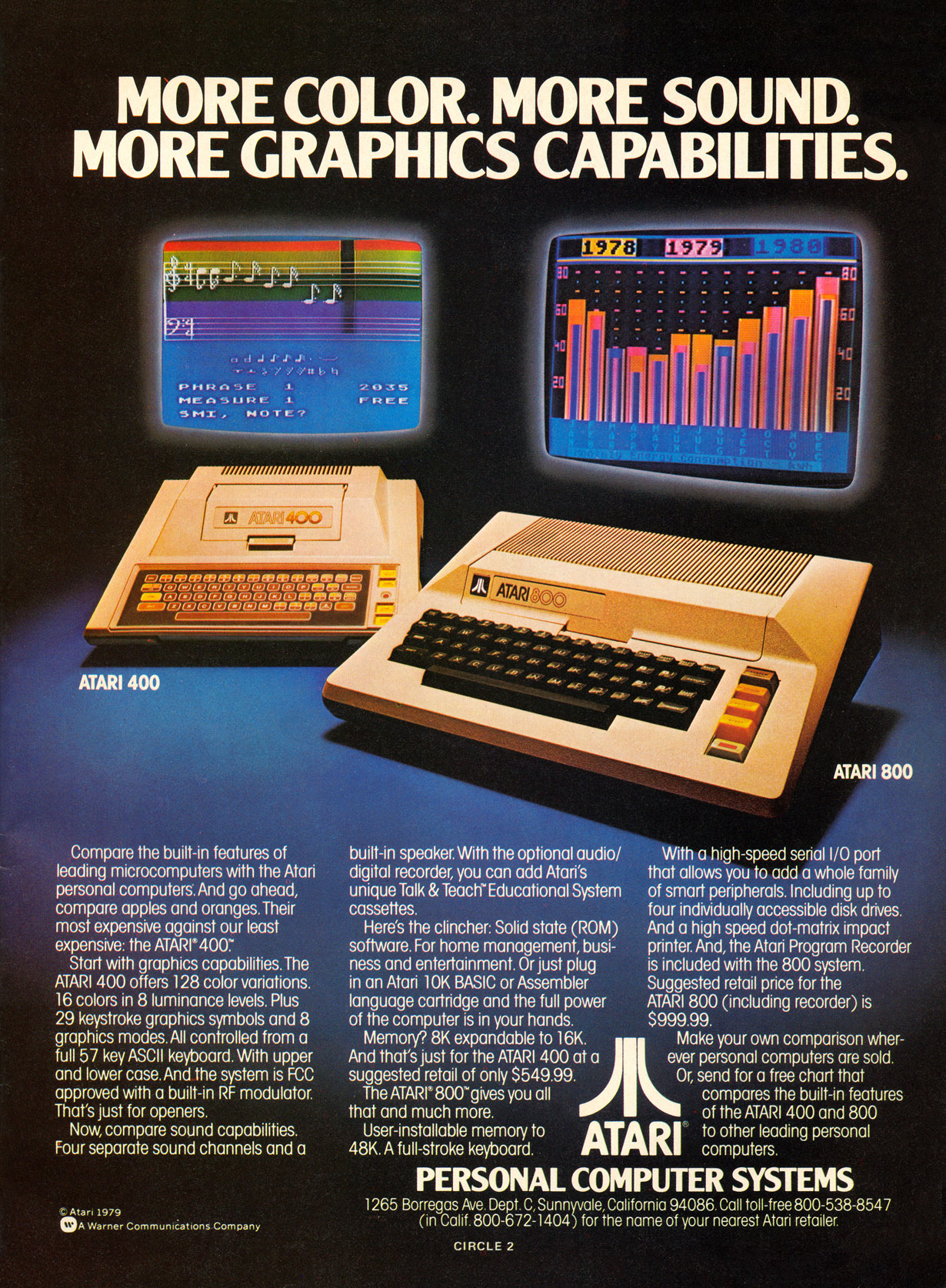
 Original 1979 Advertisement  Larger version


Two (2) Atari 400s.
 
Built 1979, Purchased used in 2002.
 

           CPU:  MOS Technology 6502 1.79 MHz


           RAM:  16 KB (max capacity)


      Storage:  One ROM cartridge slot (probable max 64 KB of memory

                      per cartridge).

    Graphics:  320 x 192 mono or 160 x 192 x 4 colors


         Audio:  Mono, up to 16-bit


Connectivity:  RGB and TV-RF output, four joystick ports,

                      came with one Atari joystick.


            O/S:  Atari proprietary


Along with my model 800 the oldest personal computers in my collection.  I have five software cartridges (Pacman, Defender, two other games plus BASIC).  As you can see from the picture, the machine has a nice streamlined case design that still looks remarkably modern even now.  Other nice features are zero boot time when using the application cartridges, and completely silent operation since a 1.79 MHz processor doesn’t need a cooling fan.


The keyboard (see photo at right) is a membrane-type, designed to be child-proof.

 
Technology notes: Nine of my antiques are powered by 6502-based CPUs; this microprocessor was shipped in tens of millions of computers and game consoles throughout the Seventies & Eighties and in fact is still being used in 2008 for various specialty applications (cars, toys, etc.).
    

Additional Links:
         Wikipedia Atari 8-bit Systems page
         Wikipedia High Resolution Photo of System


Larger version


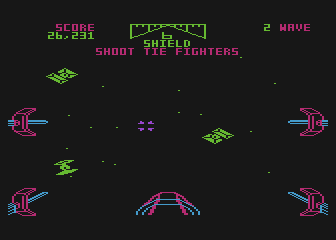
"Star Wars" for the Atari

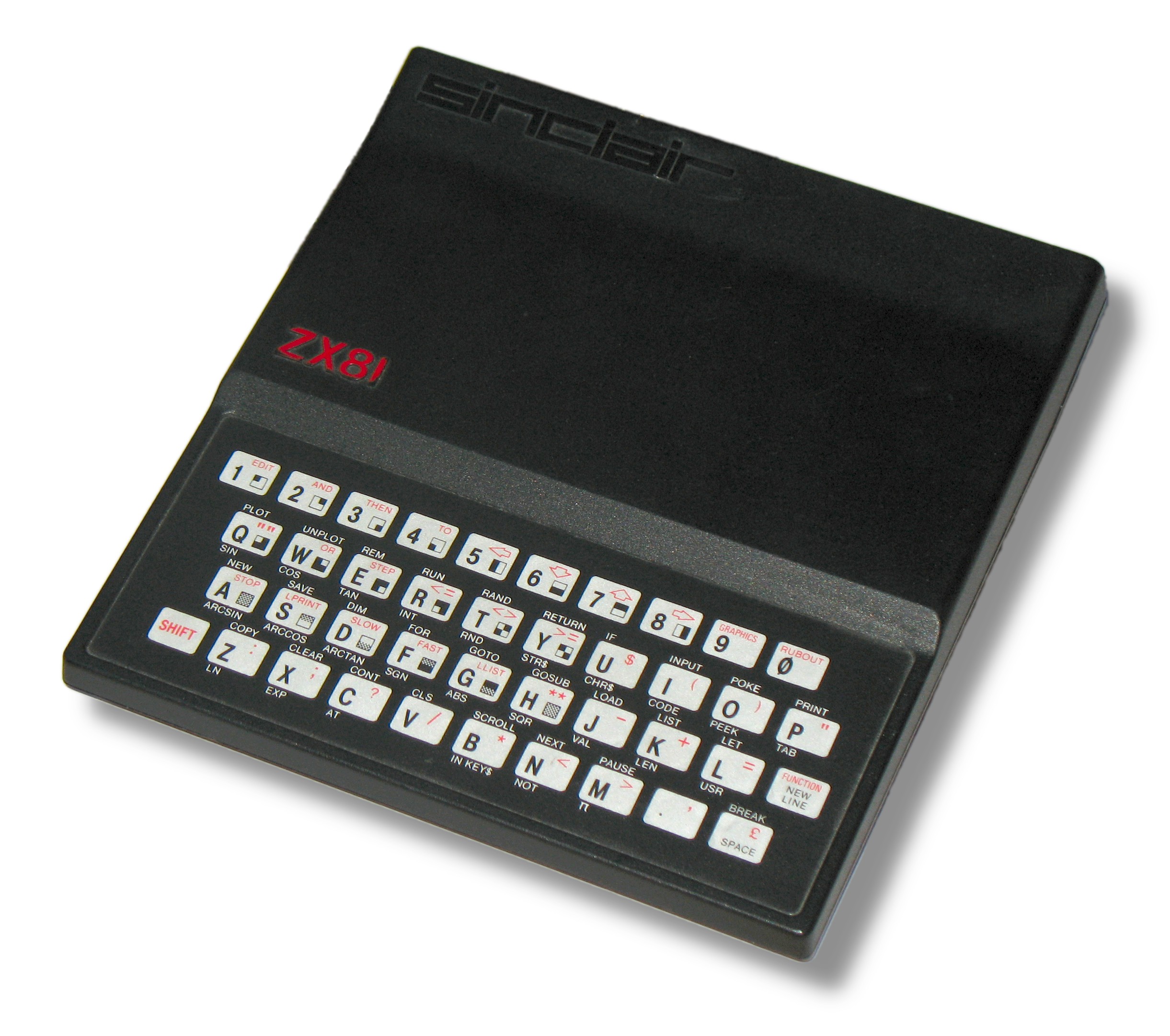
Timex Sinclair ZX81. 
Built circa 1981, purchased used in 2007.


           CPU: 
Zilog Z80A 3.5 MHz


           RAM:  1 KB internal (expandable to 64 KB with
                      external modules)


      Storage:  Cassette port


    Graphics:  24 lines x 32 characters text or monochrome 64 x 48 pixel

                     graphics.


         Audio:   None


           Misc
   Hardware:
 Z80 bus expansion slot, tape port, Sinclair thermal printer.


            O/S:  Sinclair ROM BASIC


A very popular home computer due to it’s low price of only $100.  Over one million were sold before it was replaced by a model capable of color output. Expansion modules for this computer could be daisy-chained together from the side expansion slot.

 
Additional Links:
          Wikipedia Sinclair ZX81 page
          Old Computers.com page


Larger version


Commodore VIC-20.  

Built circa 1981, purchased used in 2002.


           CPU:  MOS Technology 6502 1.0 MHz


           RAM:  5 KB (expandable to at least 32K with
                      an external cartridge)


      Storage:  One ROM cartridge slot,
                      Commodore C2N Cassette drive
.


    Graphics:  22 lines x 23 characters text or 176 x 184
                      pixel graphics with 16 colors.


         Audio:   Mono


Connectivity:  Expansion port, serial port, joystick port


            O/S:  Commodore proprietary ROM BASIC


Another popular home computer due to it’s low price ($299), in fact at the time it was probably the least expensive machine that had a full-size keyboard and color graphics and sound.  More than a million units were sold during the couple of years that this model was available.

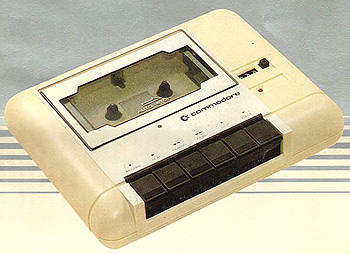
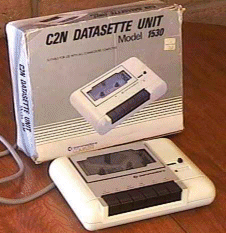
Commodore C2N Cassette drive is shown at right. This was the only way on the VIC-20 to save programs written in Commodore BASIC.

 
Back in 1982 I briefly borrowed a VIC-20 to practice some programming; unfortunately it did not have the tape drive, so anything I wrote only lasted until the machine was switched off.  Luckily for me, Marin County, where I was living at the time, received a large amount of money  from an estate trust.  Some of these funds were used to equip every county library with a brand-new Commodore PET business computer complete with cassette drive.  Not being able to afford my own computer, I spent many hours at the local library learning programming on their machine, using a cassette tape I purchased to save and retrieve my work.


In 1984 I was finally able to afford to buy my first computer, which was an IBM PCjr.  The system cost around $1,200.  For an extra $500 the IBM floppy drive could be added but I couldn't afford it, so I continued to use tape cassettes for storage.  Both the original IBM PC and the PCjr were made with tape cassette interfaces.


    Additional Links:
          Wikipedia Commodore VIC-20 page
          Wikipedia High Resolution Photo of System


Larger version

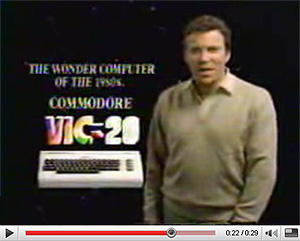
Movie with William Shatner
Video - Commodore VIC-20 Commercial
with William Shatner (circa 1981)


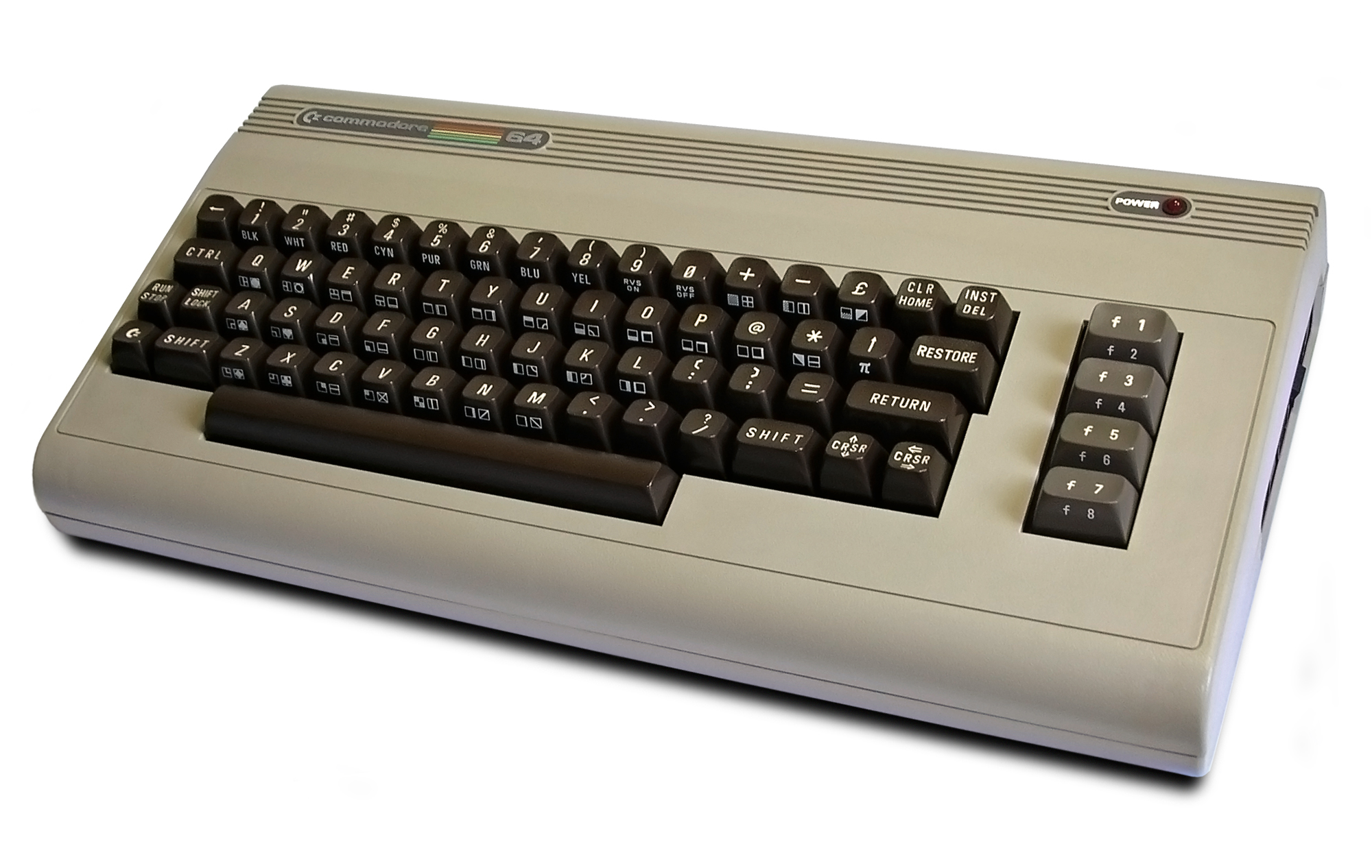
Two Commodore 64 machines.
Built circa 1982, purchased used in 2002.

           CPU:  MOS Technology 6510 1.0 MHz


           RAM:  64 KB (max capacity)


      Storage:  Commodore 1541 5¼” 170K external floppy drive.
                      Game cartridge slot.
                      Commodore C2N tape cassette drive.


    Graphics:  24 lines x 40 characters text or 320 x 200 pixel graphics

                      with 16 colors.


         Audio:   Mono

           Misc


Connectivity:  Expansion port, serial and parallel ports, 2 joystick ports.


            O/S:  Commodore proprietary ROM BASIC 2.0

 
Note: I have only one Commodore tape drive and two floppy drives.  However the tape drive can be hooked up to any Commodore system of this era and the floppy drives to any Commodore from the model 64 or newer, so these same peripherals are listed with each system they are compatible with.

 
Historical Notes:  By number of units sold (17 to 22 million) the 64 is probably the most popular  microcomputer ever made.  Cost $595 in 1982.  Under the category of  “how the mighty fall”, Commodore went from making the best-selling computer on the planet and being the first microcomputer company to achieve $1 billion dollars in sales, to corporate liquidation only twelve years later (in 1994).


Ken Polsson has created a detailed chronology of the Commodore 64.

Additional Links:

            Wikipedia Commodore 64 page
            Wikipedia High Resolution Photo of System


            Video - Commodore 64 Commercial (circa 1982)


Larger version


Larger version


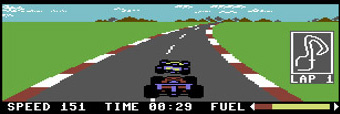
Commodore 64 racing game "Pitstop II".


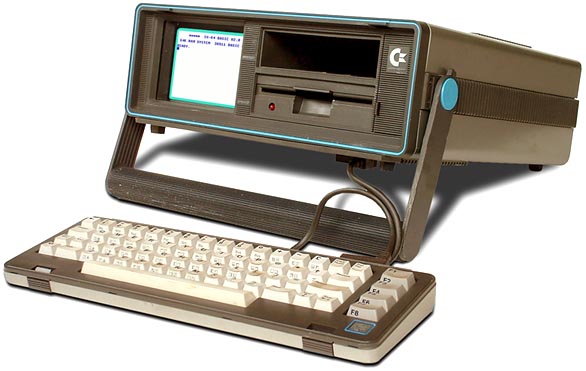
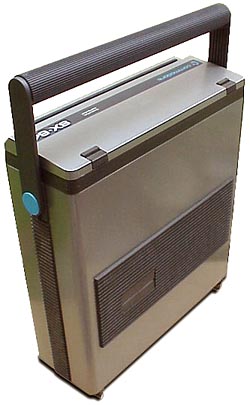
6. Commodore SX-64 Executive Portable.

    Built circa 1984; purchased used in 2002.

           CPU:  MOS Technology 6510 1.0 MHz
                      Z80 CPU (on expansion card?)


           RAM:  64 KB


      Storage:  Internal 5¼” 170K floppy drive
                      Internal cartridge slot

                      Commodore 1541 5¼” 170K external floppy drive.


    Graphics:  Built-in 5" Color CRT, 24 lines x 40 characters text

                     or 320 x 200 pixel graphics with 16 colors.


         Audio:   Mono


Connectivity:  Expansion port, serial and parallel ports, 2 joystick ports.


            O/S:  Commodore proprietary ROM BASIC 2.0


Notable as the world’s first portable computer with a color screen.  Due to it's high price (over $1,000 in 1984 dollars) only a small number were sold; this model today is sort-after by collectors.


Like the later Commodore 128 (see below), the SX-64 had two CPUs; the 6510 to run C64 software and the Z80 to run CP/M applications.
 
Additional Links:
                 Wikipedia Commodore SX-64 page
                 Oldcomputers.net page on the SX-64
                 Zimmers.net page on the SX-64

                 Video - Commodore SX-64 Commercial


Larger version


Quasar HK-2600TE Hand Held Computer.
Built circa 1983, purchased used in 2007.

           CPU:  6502 1 MHz


           RAM:  4 KB (not expandable)


      Storage:  Three sockets for ROM expansion, ROMS can be up to

                      16 KB each.


      Display:   Built-in LCD,  1 lines x 26 characters text


         Audio:   None


Networking:  Optional modem


          Misc
  Hardware:
  Thermal printer, expansion port.


            O/S:  SNAP / ROM BASIC


This computer was also sold under the Panasonic brand name.  You could make custom ROMs for it; insurance companies and others burned their own special programs on to the ROM chips for their representatives to use in the field.


This system and my Epson Geneva (see below) are the earliest systems in my collection with Liquid Crystal Displays (LCDs).


Additional Links:
      Oldcomputers.net page on the Panasonic / Quasar HHC


Larger version
 

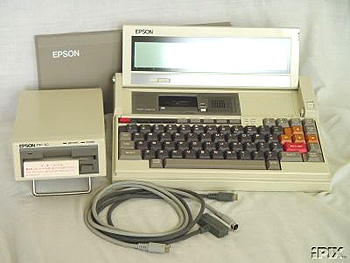
Epson Geneva PX-8. 
Built circa 1983, purchased used in 2002.

           CPU:  Z80 4 MHz


           RAM:  128 KB (not expandable)


      Storage:  Interchangeable internal ROM application chips

                      (I have chips for WordStar and Calc).
                      Internal
Microcassette drive (10 KB to 30 KB per tape).
                      Epson PF-10 external battery-powered floppy drive.


      Display:   Built-in LCD, 8 lines x 80 characters text,

                     graphics 480 x 64 pixels.


         Audio:   Built-in speaker, can play audio recorded on microcassette tape.


Networking:  300 baud modem expansion base


Connectivity:  Serial port, audio in/out.


            O/S:  CP/M 2.2


This was a cool machine for it's time, with a multi-line flip-up screen, built-in micro-cassette drive that could be used to record both data and audio, and advanced peripherals like the battery-powered floppy drive.
 

There's a small community of folks that still use this system; one of them, Fred Jan Fraan, maintains an excellent  web-site devoted to the PX-8. 


The ROM application WordStar included with this machine was at the time the dominant word processor program.  The publisher was MicroPro; I visited their headquarters in San Rafael back the early Eighties. They had a large and impressive operation with multiple sites and hundreds of employees. However, in just a few short years MicroPro’s fortunes declined as users switched from WordStar to a new market-leader, WordPerfect. San Rafael in the early Eighties was one of the centers of the microcomputer software industry; within walking distance of MicroPro was Broderbund software, where I was employed for a short time as a temp packaging game software (I did a lot of odd jobs before embarking on a career as a programmer).
 

Additional Links:
                 Wikipedia Epson PX-8 page


Larger version
 

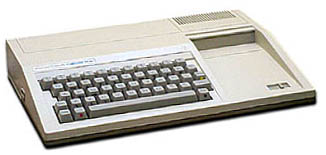
Texas Instruments TI-99/4A
Built circa 1983, purchased used in 2007.

           CPU:  Texas Instruments TMS9900 16-bit 3.0 MHz


           RAM:  16 KB (not expandable)


      Storage:  Cartridge slot


    Graphics:  24 lines x 32 characters text or 192 x 256 pixel graphics

                     with 16 colors.


         Audio:   Mono


Connectivity:  Cartridge port, cassette port, joystick port and bus

                       expansion slot.


            O/S:  Proprietary ROM BASIC


This was the second home computer that Texas Instruments made.  It was popular with over two million sold during it's lifetime.  Originally introduced in 1981 with a black and silver case, I have the cheaper beige version that came out in 1983 and was priced at $99.

A fairly unique feature was the proprietary CPU; while most computer makers were using third-party chips, Texas Instruments used their own CPUs, which were based upon the company's mini-computer chips.


At one time Texas Instruments was selling TI-99 computers at the rate of 150,000 per month; but after a money-losing price war with Commodore and other competitors, TI left the home computer market in 1984 and never returned.

Additional Links:
            Wikipedia Texas Instruments TI-99/4A page


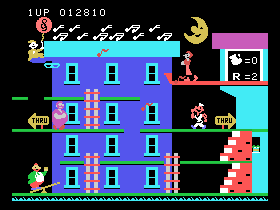
Screenshot from "Popeye" for the TI -99/4A.

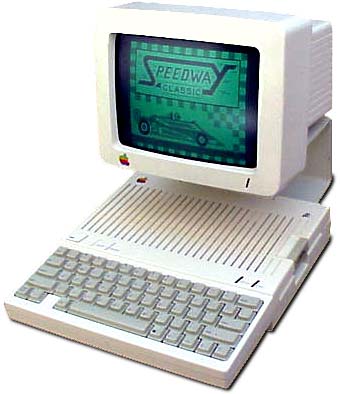
Apple IIc. 
Built circa 1984, purchased used 2002.

           CPU:  WDC 65C02 1 Mhz


           RAM:  128 KB (max capacity)


      Storage:  Internal 5.25" 140 KB floppy drive


    Graphics:  80 x 24 text, graphics 560 x 192 15 colors


      Display:   Apple 9" monochrome CRT monitor


         Audio:   Built-in speaker


Networking:  300 baud modem expansion base


Connectivity:  Serial ports, mouse/joystick port, floppy port,

                      video expansion port, audio out.


            O/S:  Apple ProDOS


The portable version of the Apple II, perhaps most famous for being seen in the movie 2010 (the idea that an astronaut in the year 2010 would be using what would by then be a twenty-six year old computer does seem a little far-fetched today).


Note:  While technically a portable, this machine, like most “portable” computers of the day, needed to be plugged-in to an external power source to run.


Additional Links:
                 Wikipedia Apple IIc page

                 Video - Apple IIc commercial (1984)


IBM PCjr.
Built circa 1984, purchased used 2002.
 

           CPU:  Intel 8088 4.3 MHz


           RAM:  640 KB (max capacity)


      Storage:  Two 5.25" 360 KB floppy drives
                      Two ROM cartridge slots


    Graphics:  80 x 25 line text, graphics 320 x 240 x 16 colors

                      or 640 x 200 x 4 colors


       Display:  IBM PCjr 13" RGB Color CRT monitor


          Audio:  Music and system sounds


 Networking:  Internal 300 baud modem card


           Misc
   Hardware:
  Infrared wireless keyboard, stackable 'Sidecar' expansion

                      modules (I have three sidecars, the 512 KB memory

                      expansion, parallel port and the Speech Attachment).
                      Mouse/joystick ports, two IBM joysticks.


             O/S:  IBM PC-DOS 2.1


IBM’s “home” version of their original IBM PC, introduced in 1984. This was a controversial computer and IBM's first flop. Before it arrived there was high expectations that this would be a version of the IBM PC that would be affordable for home use. It arrived with better graphics and sound than the original IBM PC, but it became clear that IBM went too far in crippling the machine
in other areas to stop it undercutting sales of the higher-priced "business" version. Memory was limited to one-fifth the capacity of a regular IBM PC, the CPU was slowed down. only one floppy drive was supported, DMA was removed to slow disk to memory transfers, and worst of all it was shipped with a low quality chiclet-style keyboard. Eventually to try to mitigate the resulting PR disaster, IBM shipped proper replacement keyboards to everyone who had bought a Jr. This wasn't enough to turn things around, and the Jr. was discontinued after being on the market for only one year.


I purchased my first IBM PCjr brand new in March 1984 when it was first released; it was in fact the first computer I actually owned (I had borrowed and leased machines earlier). I had high hopes that I would be able to make money by writing software for what everyone thought would be a very successful system. I spent months working on creating a Mac Paint clone for the system, but stopped the project after it became clear that the Jr. was going to be a failure and also because IBM itself published their own paint program for the Jr. My machine was unfortunately eventually lost in the 1989 San Francisco earthquake, a fitting end to my disastrous PC Jr project.


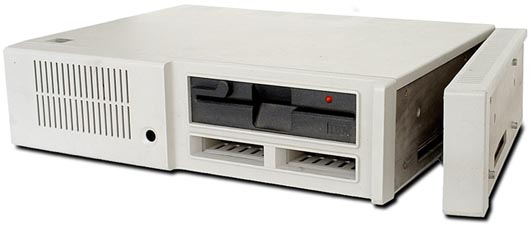
I picked-up this particular Jr in 2002. It was greatly customized by the previous owner to get around the original limitations.  This version has a second floppy drive mounted in it’s own chassis, with special ‘extension’ power and signal cables running to it from the main case. An extra 512K of RAM was added using a memory sidecar.  Custom system drivers were added to the boot floppy to allow DOS to see the second drive and the full 640K of RAM.  This system is therefore probably one of the most expanded Jr.s in existence; the modifications do sound a little funky, but I tested them and they actually work.
       
Detailed technical info on the Jr. can be found at Michael Brutman’s web-site. This guy owns three PCJrs.

      Additional Links:
          Wikipedia IBM PCjr page

          Oldcomputers.net IBM PCjr page


Larger version


Larger version


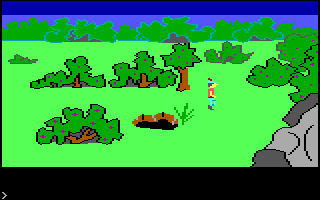
King's Quest on the PCjr


Video - IBM PCjr Commercial circa 1984


Two (2) Commodore 128s. 

Built circa 1985, purchased used in 2002.

           CPU:  MOS Technology 8502 2.0 MHz and
                      Zilog Z80A 4 MHz


           RAM:  128 KB (not expandable)


      Storage:  Commodore 1541 5¼” 170K external floppy drive.
                      Game cartridge slot.
                      Commodore C2N tape cassette drive.


    Graphics:  24 lines x 80 characters text

                     or 320 x 200 pixel graphics with 16 colors.


         Audio:  Mono


Connectivity:  Expansion port, serial and parallel ports, 2 joystick ports.


            O/S:  Commodore proprietary ROM BASIC 7.0,
                    
 Digital Research CP/M 3.0,
                      Commodore GEOS (Graphical Environment Operating System).


An upgrade from the C64 with multiple personalities. This system could be run in Commodore 64 mode, 128 mode ("native") or in CP/M using the built-in second CPU, a CP/M-compatible Z80A.
 

René van Belzen has a good C128 info page here.


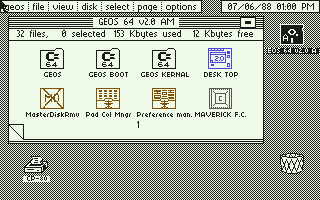
In 1986 GEOS was released, a graphical operating system which was Commodore's response to the Apple Macintosh.  I picked up a copy of GEOS but haven't had time yet to try it out.  The screen shot at right shows a typical GEOS desktop view.
 

      Additional Links:
                 Wikipedia Commodore 128 page


Larger version


GEOS desktop

Commodore Amiga 1000
Built circa 1985, p
urchased used in 1990 with an Okidata color printer.  I acquired the official Amiga color monitor for it in 2002.

           CPU:  Motorola 68000 7.0 MHz


           RAM:  512 KB (expandable to 8 MB)


      Storage:  Internal 3.5" 880 KB floppy drive
                      External 3.5" 880 KB floppy drive


    Graphics:  320 x 200 with 4,096 color palette or 640 x 400 x 16 colors.


      Display:   Amiga Color CRT 13"


         Audio:   Stereo 8 bit 28 KHz sampling rate


           Misc
   Hardware:
  System expansion port, serial and parallel
                      ports, 2 joystick/mouse ports.
                      Okidata color printer


            O/S:  Amiga OS 1.x
 

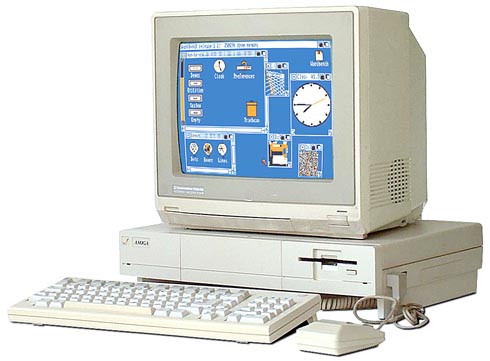
Historical Notes: This was the first Amiga model, introduced in 1985. It was considered a revolutionary machine due to it’s advanced color graphics (see screen shot at right).  It had a 4,096 color palette at a time when the IBM PC was limited to 16 colors and the Mac was monochrome only.  As a result, the Amiga developed a large and almost fanatical following in it’s time.  Commodore went bust in 1994, but fans of this machine and it’s operating system continue to try to get the platform resurrected in some form.


      Additional Links:
                 Wikipedia Amiga 1000 page


Larger version


Larger version
 

Nintendo Entertainment System Game Console.
Manufactured circa 1985,
purchased used in 2008.
 

         CPU:  Ricoh 2A03 8-bit 1.79 MHz, based upon a MOS Technology

                    6502 core.


         RAM:  2 KB internal, could be expanded with additional memory

                    built into a game cartridge, maximum address space 48 KB.


  Graphics:  256 x 224 NTSC resolution, max 25 simultaneous colors

                   from an 53 color palette.


       Audio:   Mono


    Storage:  Proprietary game cartridges, usually up to 64 KB capacity.


          O/S:  Proprietary


        Misc
 Hardware:  Two game controller ports, two controllers,

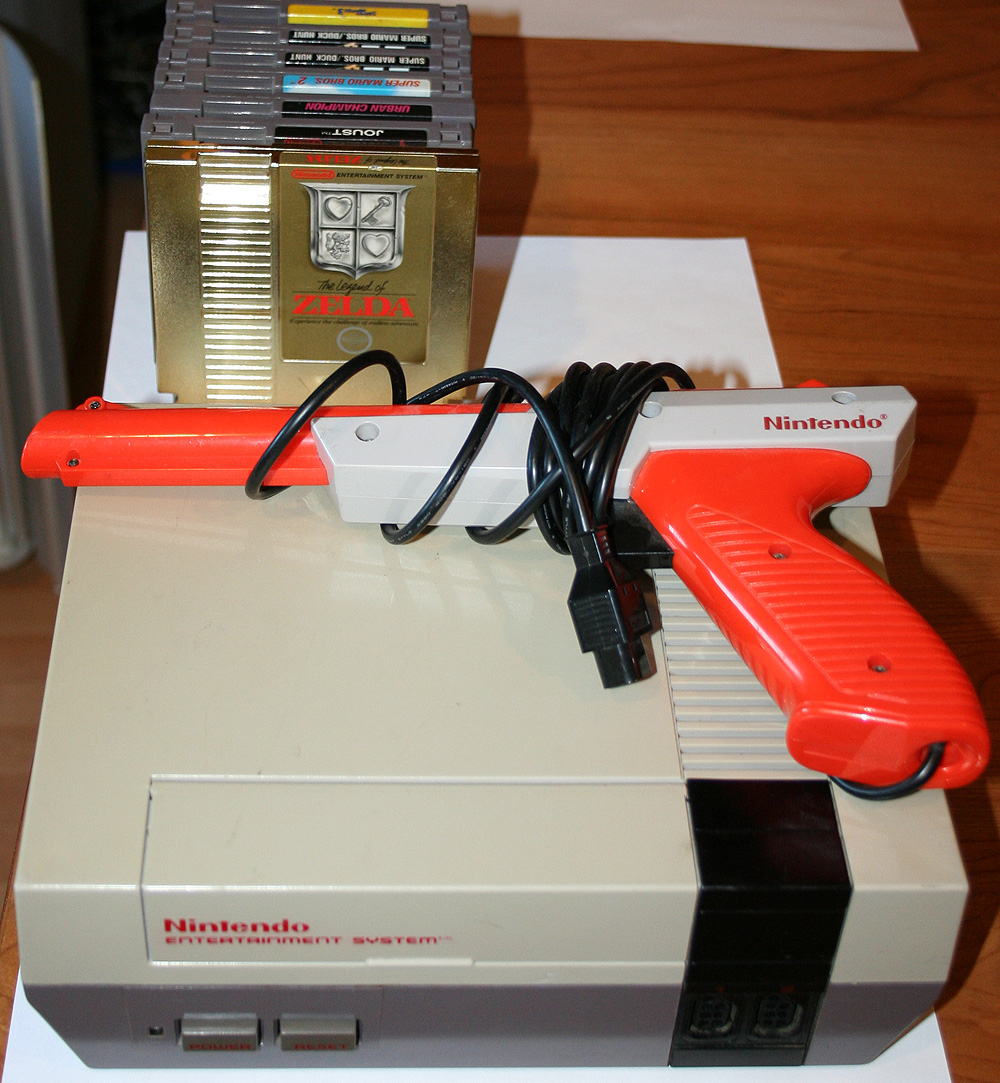
                    plus also the NES Zapper light gun (see photo).

Probably the most popular console
of the Eighties, with over 62 million machines sold.  The platform was finally discontinued in 1995.

Along with a first-generation machine I also acquired the official light gun and seven game cartridges as shown in the photo. 


The game cartridges are huge, each one is close to the size and weight of a modern-day Sony Playstation Portable.  A NES cartridge usually contains two ROM chips - one for the game program itself and the second for the game's graphics.  For the more elaborate games, bank-switching could be used to get around the 48 KB memory limit.  Further info on the cartridges and instructions on how to hack one can be found here.

                  
  Additional Info: 
         
Wikipedia Nintendo Entertainment System Page
          Raphael Assenat's NES Stuff Page


Larger version


Game "Super Mario Bros 3"


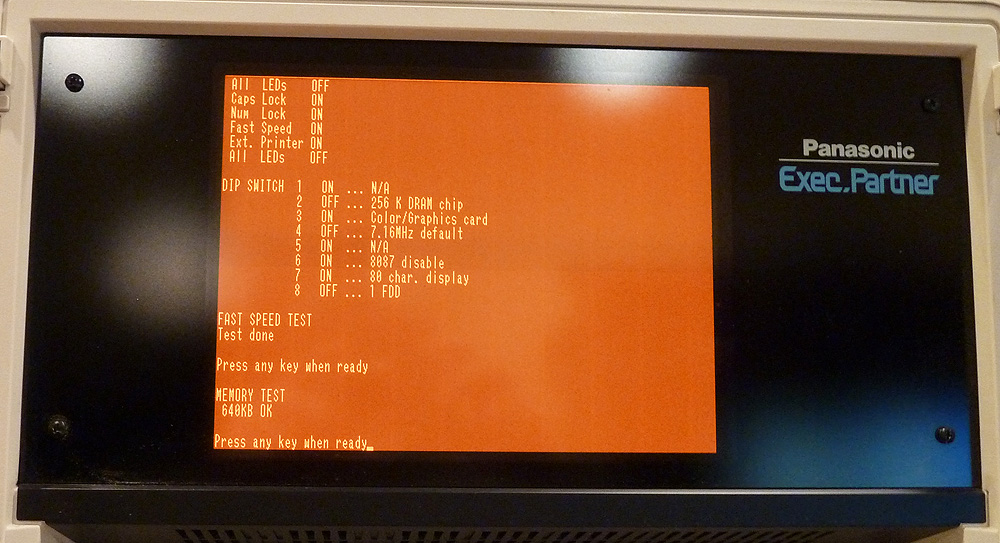
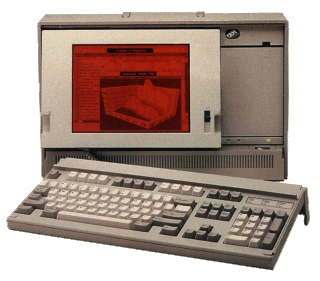
Panasonic Executive Partner portable computer.

Purchased new in 1986.


           CPU:  Intel 8086 7.0 MHz


           RAM:  640 KB (max capacity)


      Storage:  Internal 5.25" 320 KB floppy drive,
                      Internal Seagate 20 MB hard drive.


    Graphics:  640 x 200 monochrome


      Display:   Built-in 11" gas plasma screen


         Audio:   Speaker for beeps


           Misc

   Hardware:  Built-in thermal printer, serial and parallel ports.


            O/S:  MS-DOS 2.0
 

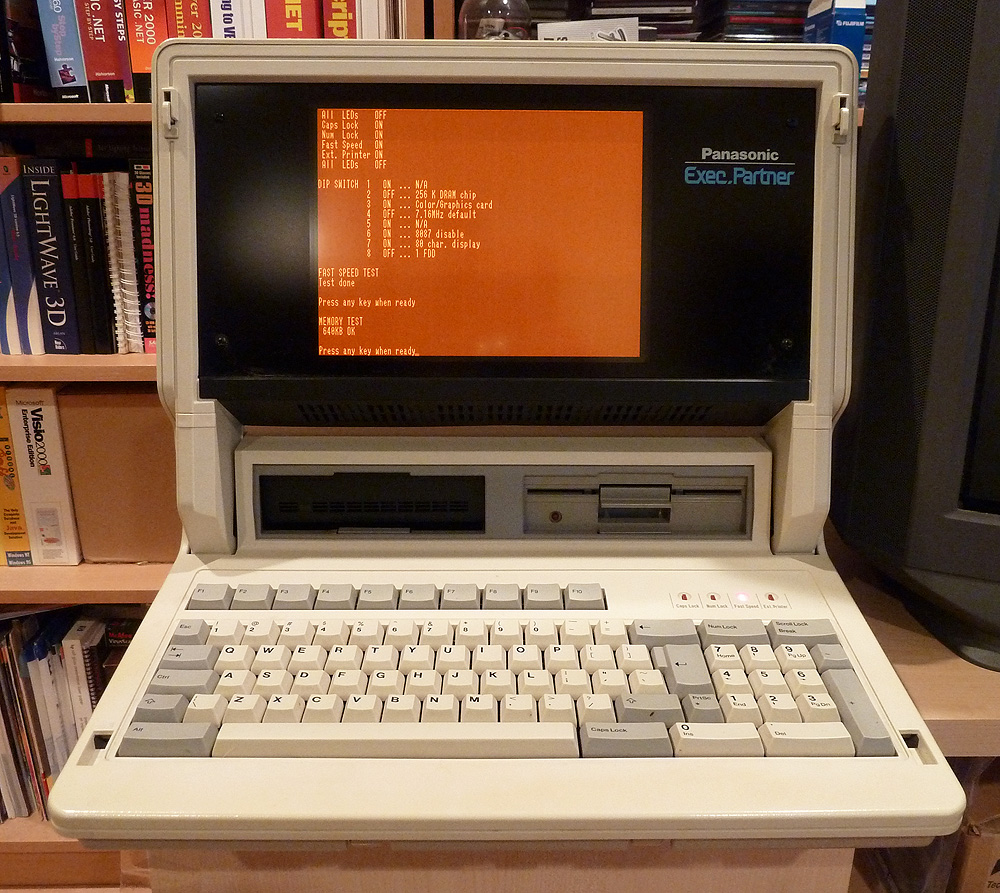
This was the second computer I ever owned. With the gas plasma screen and built-in thermal printer, the Executive Partner was an exotic & expensive machine for it’s time.  It originally cost $5,000, but due to a trade dispute this model in 1986 could no longer be imported into the United States.  I therefore picked this unit up for a considerable discount and I paid the dealer to replace one of the two floppy drives this system originally had with an 20 MB hard drive. This is the oldest system in my collection with a hard drive.

Due to the original high price and the import ban this computer appears to be very rare; I found only two collectors besides myself that have this system listed in their antique collections, and neither machine had a hard drive.

The gas plasma screen was the best kind of portable display in 1986, much more readable than the primitive LCDs of the time but much lighter than a CRT. The drawbacks of gas plasma were that they were power hungry (no running on battery power) and expensive.  Gas plasma displays were used extensively in GRID Systems portable computers, very high-end machines used by military organizations and NASA.  Gas plasma technology was used for years in flat-panel plasma TVs. but has been phased out and replaced by LCD and OLED screens.
       
The first couple of years I owned the Panasonic I used to take it with me to client sites.  Customers were either impressed or mortified, perhaps both, when I used this machine’s built-in thermal printer to  print my bill to them right on the spot.


Larger version


Larger version


Larger version


Apple IIe Platinum

Built circa 1987, purchased used in 2001.

           CPU:  MOS 65C02 1.0 MHz


           RAM:  128 KB (max capacity)


     Storage:  Two external 5.25" 140 KB floppy drives


    Graphics:  560x192 monochrome, 140x192 16-color.
                      80 column text display card installed.


      Display:   Apple Color CRT


         Audio:   Speaker for beeps


           Misc
   Hardware:
  Parallel printer port card


            O/S:  Apple DOS and ProDOS

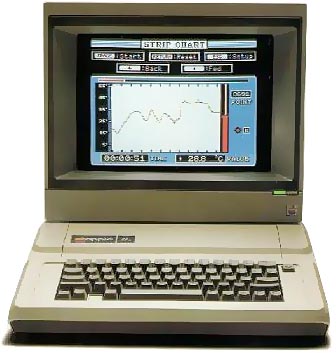
The IIe Platinum was introduced by Apple in 1987; it was the last and most advanced Apple II that still came in the classic case that had been used since 1977. The IIe Platinum was in production for five years; it lasted until the Apple II line itself was discontinued in November 1993.  


My first paying programming job was writing an educational game for the Apple II, in 1983. I couldn't afford to buy an Apple II so I rented one for the project.


The Apple II probably had the longest manufacturing life of any microcomputer design; stretching from 1977 through 1993 (seventeen years!). A detailed history of the entire Apple II line can be found here.

   Additional Links:
          Wikipedia - Apple II Page
          Video - Apple II Commercial (1986)


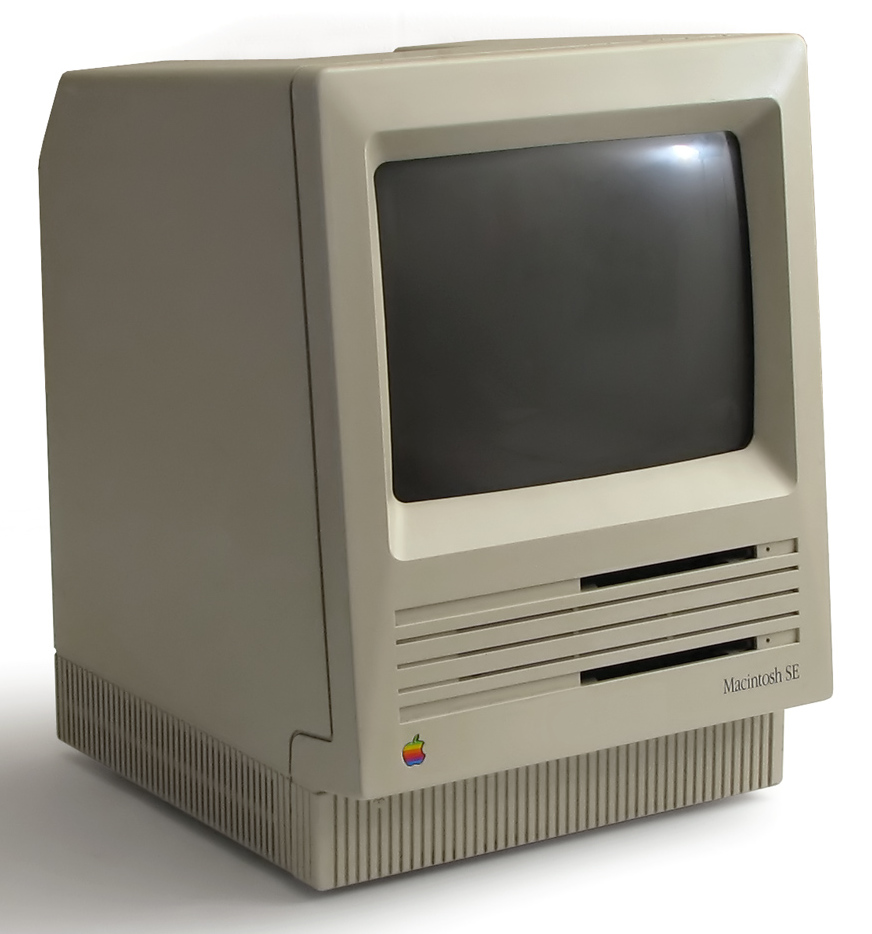
Apple Macintosh SE
Built circa 1987, purchased used in 2009.

           CPU:  Motorola MC68000 8 MHz


           RAM:  1 MB expandable to 4 MB


      Storage:  80 MB SCSI internal hard drive,

                      One 800 KB 3.5" floppy drive,

                      SCSI port  (5 Kbps) for external devices.


    Graphics:  512 x 342 monochrome


      Display:   Built-in 9" CRT monochrome


         Audio:   Mono 8-bit, minijack out, also built-in speaker.


Connectivity:  1 SE PDS internal slot, 2 external ADB
                      ports, 2 serial ports, 1 floppy drive port.


            O/S:  Apple System 6.0.3
 

My first original form-factor Mac; been wanting to get one of these ever since 1984.  :)


The original Mac introduced in 1984 set the computer  world on fire with it's graphical interface and 'appliance' orientation.  The SE and the Mac II were both released in 1987, and were the first really expandable Macs which marked a move away from the original 'computer appliance' concept.  The SE's expansion slot was labeled 'PDS', short for Processor Direct Slot; it can take accelerator cards up to 50 MHz in speed.  This was also the first Mac with a cooling fan, a feature that Steve Jobs had forbidden in previous models (by 1987 Jobs was no longer at Apple).


I actually picked-up two Mac SEs from the seller; they both power-up but only one of them is able to boot from the internal hard drive.


The working machine currently has Apple System 6.0.3 installed (see screenshot at right).  It also has Microsoft Word 3.0.  The most recent O.S. that an SE can run is System 7.5.5.


The list price of this system in 1987 with the original 20 MB hard drive was $3,700; the equivalent of $10,784 in late 2025.
 

   Additional Links:
          Wikipedia - Apple Macintosh SE  Page
          Apple - Macintosh SE Technical Specifications


Dual-floppy model (from Wikipedia)
Larger version


Mac System 6 typical screen (from Wikipedia)
Larger version


Two (2) Atari Mega ST4 computers.
Built circa 1988,
purchased used in 2007.


           CPU:  Motorola 68000 8.0 MHz


           RAM:  4 MB (max capacity)


      Storage:  Internal 3.5" 720 KB floppy drive.
                      Two Atari SH205 stackable external hard drive enclosures

                      with 20 MB drives.

                      32KB x 6 ROMs for the BIOS.


    Graphics:  320 x 200 x 16 colors, 640 x 200 x 4 colors,
                      or 640 x 400 monochrome.


     Displays:   One Atari Color CRT monitor and one Atari Monochrome monitor.


         Audio:   Yamaha stereo chip


Connectivity:  MIDI in-out, serial, parallel, joystick, mouse, RGB ports.


            O/S:  TOS / GEM (Graphical Environment Manager) 2.x


This was the computer for folks in the Eighties who wanted an Apple Macintosh but couldn't afford one. It used the same CPU as the Macintosh and a graphical operating system but was priced thousands less than a similarly-configured Mac.  Comparing the systems, the Atari STs had more memory, color and expandability, but the Mac had an edge when it came to industrial design and presentation.  For example, the graphical design of the Mac operating system was superior to Atari's. Apple did introduce a color-capable Macintosh a year after the first Atari ST, but it cost over $5,000 (around $9,300 in 2009 and $14,574 in late 2025 dollars).  In comparison, a similarly-equipped color Mega 4 sold for only $2,600 ($4,800 in 2009, $7,578 in late 2025 dollars).

A significant advantage that Atari had was support for electronic musical instruments, thanks to it's built-in MIDI (Musical Instrument Digital Interface) ports. This made these systems quite popular with musicians; in fact I purchased my Atari Megas from a local composer. 


The GEM operating system was developed by Digital Research, a company that in the early days was a leader in the field of microcomputer operating systems but eventually lost the market to Microsoft.
 

   Additional Links:
               Wikipedia Atari ST / Mega page


Larger version


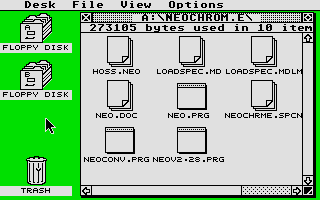
GEM Desktop


Video - Atari Mega vs. Apple Mac Commercial


19. Atari Portfolio palmtop computer.
      Built circa 1989, purchased used in 2008.

           CPU:  Intel 80C88 16-bit 5 MHz


           RAM:  128 KB (not expandable)


      Storage:  128 KB ROM, Atari memory storage cards (128 KB to

                      640 KB each).


      Display:   240 x 64 monochrome LCD


         Audio:   Speaker for beeps


           Misc
   Hardware:
  Expansion slot takes Atari accessories such as memory and

                      application cards, also hardware modules such as modems,
                      etc.  Currently have the Atari Parallel Interface module and

                      an Atari PowerBasic application card.


            O/S:  DIP DOS 2.11 (MS-DOS clone)

This was the world's first PC-compatible palmtop computer.
  It can run most text-based MS-DOS applications such as Lotus 123.  The internal memory was configured to appear as drive "C:".  The built-in ROMs contain the operating system and five application programs: a diary, calculator, text editor, spreadsheet and address book.
 

The Intel 80C88 CPU is a low-power CMOS version of the venerable 8088, the brain of the original IBM PC.  Thanks to this chip and the absence of any disk drives this computer runs on ordinary 'AA' batteries.
 

I purchased several of the Atari accessories for this system (shown in photo at right): The Atari Parallel Printer Interface module, the Atari PowerBasic card and the PC Card Drive which allows a regular PC to read and write Atari memory cards.

 
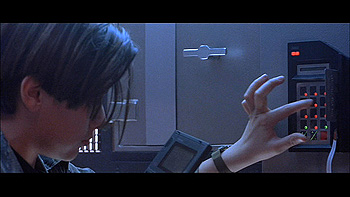
The Atari Portfolio appeared several times in the movie  "Terminator 2"; it is first used by John Conner to hack an ATM and then later the vault security system at Cyberdyne Systems (see photo lower right).

   Additional Links:
          Wikipedia - Atari Portfolio Page


Larger version


Accessories for the Portfolio - Larger version


The Portfolio in use in a scene from Terminator 2


Sega Genesis / Mega Drive Game Console.
Manufactured circa 1989,
purchased used in 2008.
 

         CPU:  Motorola 68000 16-bit 7.67 MHz plus
                    Zilog Z80A 3.5 MHz for audio processing.


         RAM:  64 KB internal (expandable by game cartridges)


    Storage:  Proprietary game cartridges, up to 5 MB capacity. 


  Graphics:  320 x 224 resolution, max 64 simultaneous colors from

                   512 color palette.


       Audio:   Stereo, generated by the Z80 processor with 8K

                    dedicated memory.


Connectivity: Two game controller ports, "EXT" serial port.


          O/S:  Proprietary


One of the first 16-bit game consoles, this was  Sega's most successful system with 29 million sold. In Japan it was called the "Mega Drive", in the rest of the world the "Genesis".


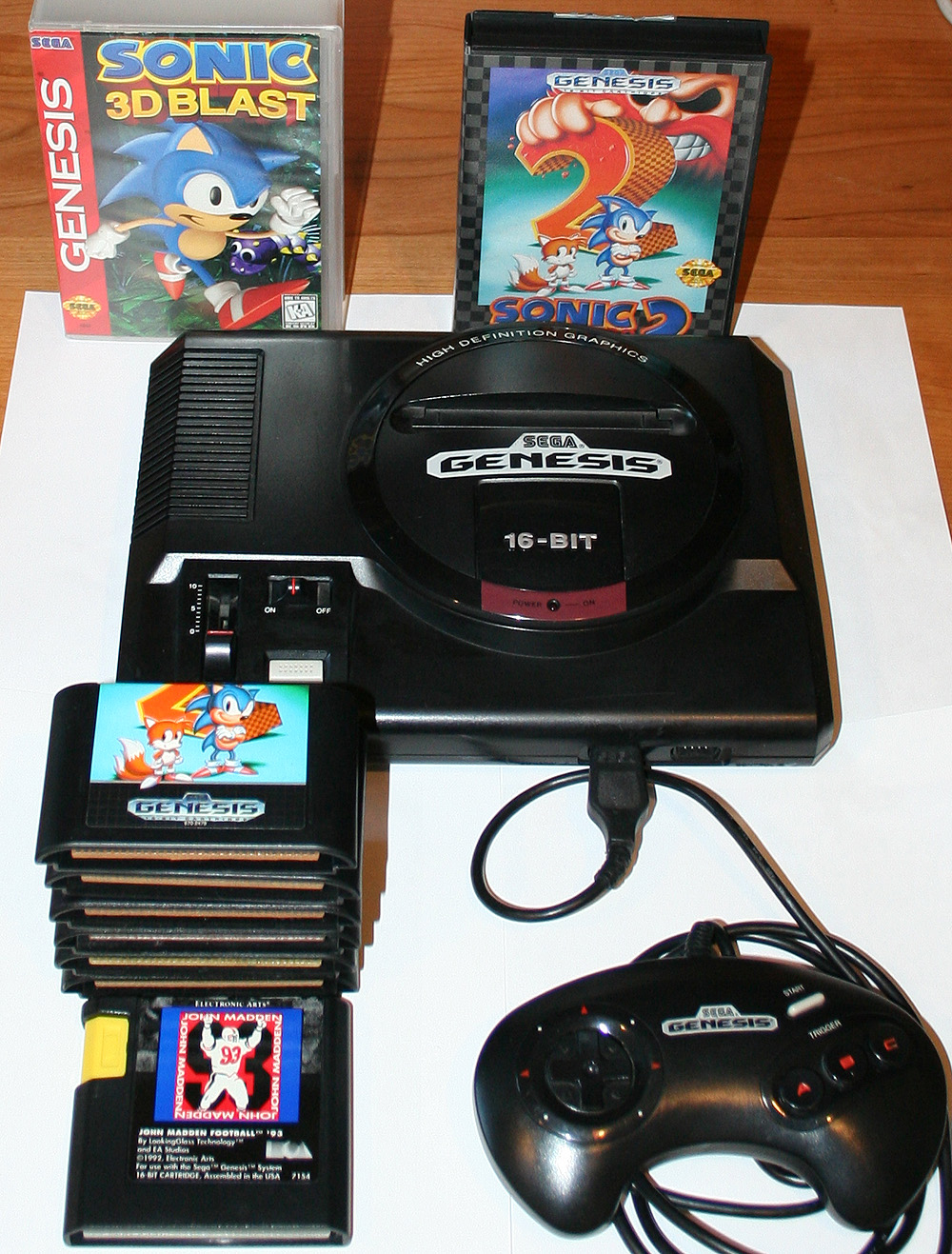
The unit I acquired was the first and most elaborate version of the Genesis, equipped with a volume control, stereo headphone jack and RF out port. These features were eliminated from later versions to save cost.


With the console I acquired eight game cartridges and one controller, as shown in the photo.


I listed the cartridge capacity at 5 MB since reportedly that was the largest ever made for the Genesis, but technical info I have found on game cartridge design indicates that the actual limit was the size of the CPU's address space.  In the case of the Genesis that was 16 MB.  Some game consoles supported memory bank switching which allowed even the CPU address space limit to be exceeded.  The real constraint on cartridge capacity was the cost of the ROM chips, which for obvious reasons could not exceed the game's selling price.  In the end this is what eventually killed the cartridge format; optical discs ended-up being able to hold far more information at a much lower cost.


The progression in console game size has been remarkable; in 1985 the typical size was 48 KiloBytes or less; in 2008, a Playstation 3 game can be up to 50 GigaBytes (the maximum capacity of a Blu-Ray disc) - a staggering one million times the average size of a 1985 cartridge.
           
  Additional Info: 
            
Wikipedia Sega Genesis / Mega Drive Page


Larger version


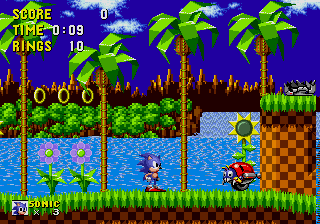
Game "Sonic the Hedgehog"


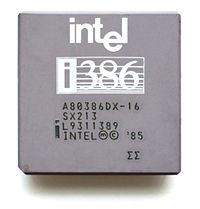
Custom Intel 80386 tower system. 
 
Home-built in 1990.


           CPU:  Intel 80386 25 MHz


           RAM:  4 MB (max capacity of motherboard)


      Storage:  Internal 5.25" 1.2 MB floppy drive
                      Internal 3 GB IDE hard drive

                      CD-ROM 2x drive
                      Colorado 250 MB tape drive


   Graphics:   VGA 640 x 480 color


      Display:   Generic VGA Color CRT


         Audio:   Sound Blaster stereo card


Connectivity:  Parallel printer port card, serial port card.


            O/S:  MS-DOS, Windows 3.11
 

Originally had a Control Data 330 MB ESDI hard drive, with SCO Xenix installed (I was an authorized SCO dealer and major Xenix/Unix fan back in the day).
 

Circa 1993 I upgraded the system with a CD-ROM  drive, VGA card (to replace the original mono graphics adapter), and a Sound Blaster to make the system ‘game ready’.  Around this time I also converted the machine over to Windows 3.11 (see screen shot at right), as more of my paying work was on this platform and the Xenix work was drying up.


This was the fourth machine I owned and was my main computer for five years.  The third, a home-built 286 machine with a 80 MB hard drive, I sold to a friend to raise the money needed to buy parts for this machine.  Acquiring the components wholesale, the 386 motherboard with 4 MB of RAM still cost $2,500, and the original 330 MB hard drive a whopping $3,000. I probably invested a bit north of $6,000 total building this system (the equivalent of $9,700 in 2009 and $15,265 in late 2025).

 
The Sound Blaster was eventually removed and used in my next computer, a Dell XPS Pentium-90 machine I purchased in 1995 (I managed to entirely skip the 486 generation).  In 2000 I gave the Dell to one of my cousins so that she could have a PC to play with.


(No photo of system currently available)


Typical Windows 3.11 desktop, from Rick Schinnell's web site.

IBM PS/2 Model P70-386 Portable
Built circa 1990, purchased used in 2002. 
 

           CPU:  Intel 80386 20 MHz


           RAM:  16 MB (official max for this model)


      Storage:  Internal 3.5" 1.44 MB floppy drive
                      Internal 60 MB ESDI hard drive


   Graphics:   VGA 640 x 480, grayscale on internal screen,

                     16 colors on external monitor.


      Display:   Built-in 'pop-up' gas plasma


         Audio:  PC speaker for beeps - for proper audio, a sound card

                     needs to be installed in one of the MC expansion slots.


Connectivity:  One 16-bit and one 32-bit Micro Channel expansion slots,

                       parallel and serial ports, VGA port, PS/2 mouse,

                       external drive port.


            O/S:  PC-DOS, OS/2 and Windows capable.


This was perhaps one of the most expensive PC portables ever made, with a list price of $7,495 in 1990 ($19,000 in 2025 dollars!).


It's the only system in my collection based upon IBM's PS/2 architecture.  The PS/2 line was IBM's attempt to take back control of the "IBM compatible"  market and featured a number of  technical improvements and a proprietary bus system called "Micro Channel".  Ultimately IBM's strategy failed as the clone makers cherry-picked the features they could (such as VGA graphics) and ignored the ones legally out-of-bounds (such as Micro Channel).  It didn't help that PS/2 equipment was premium-priced but IBM cut some corners on quality; as I recall the IBM PS/2 VGA monitors in particular were cheaply made and not sharp.
      
      Additional P70 Links:
         
Jim Shorney's web page on upgrading the P70


Commodore Amiga 3000
Built circa 1990, purchased used in 2002.


           CPU:  Motorola 68030 25 MHz


           RAM:  2 MB (expandable to 16 MB)


      Storage:  Internal 3.5" 880 KB floppy drive
                      Internal 50 MB SCSI hard drive


    Graphics:  320 x 240 and up, 4096 colors
                      down to 4 depending upon resolution.


      Display:   Amiga Color CRT 13"


         Audio:   Stereo 8 bit 28 KHz sampling rate


Connectivity:  'Zorro3' expansion slots, serial and parallel
                       ports, 2 joystick/mouse ports, external
                       floppy and SCSI-2 ports.


            O/S:  Amiga OS 2.0
 

Considered a high-powered graphics workstation in it’s time, this computer was featured on the cover of Byte magazine when it was introduced back in 1990.
 

The Amiga 2000, 3000 and 4000 series were often used for video production work; well-known video tools such as Newtek’s Video Toaster card and the Lightwave 3D program were originally developed for the Amiga platform.  Extensive technical information on the 3000 is available here and here.


2025 Update: I found that the built-in battery had spilled acid on the motherboard, damaging some of the traces. The board will need to be repaired to make this computer work again.


Additional Links:
          Amiga 3000 page on the Amiga History site.


Larger version


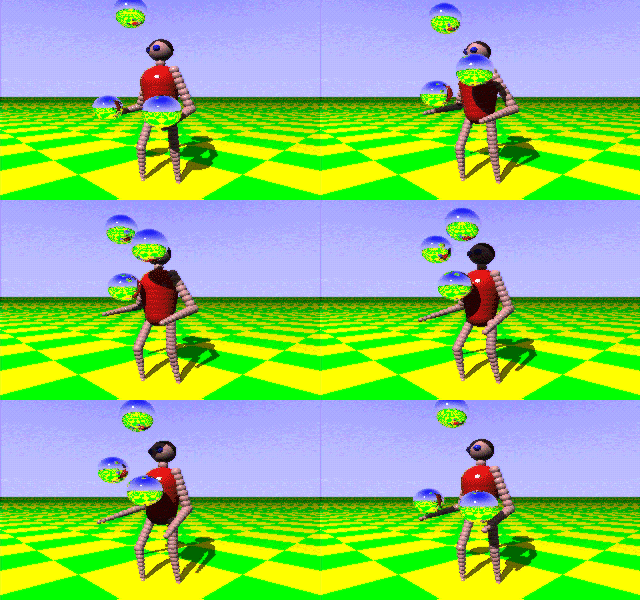
Early ray-tracing on the Amiga - the Juggler
 

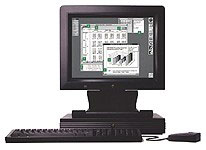
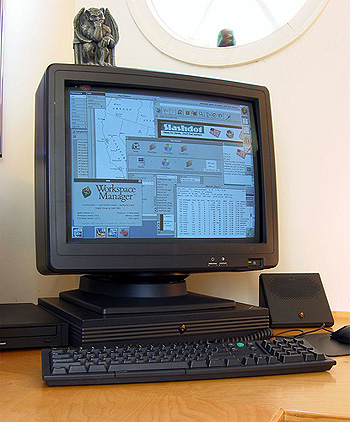
NeXT Computer NeXTstation Color Turbo
Built 1992, purchased used in 2002.


           CPU:  Motorola 68040 33 MHz


           RAM:  32 MB (expandable to 128 MB)


      Storage:  Internal 3.5" 2.88 MB floppy drive
                      Internal 2.1 GB SCSI hard drive

                      External Plextor SCSI CD-ROM drive


    Graphics:  1120 x 832 16-bit color


      Display:   Next Megapixel 21" Color CRT


         Audio:   Stereo 16 bit 44 KHz sampling rate


 Networking:  10Base-T Ethernet


Connectivity:  Serial, Parallel, SCSI ports.


            O/S:  NextStep 3.3
 

An exotic, high-end Unix-based workstation.  This model was the most advanced one built by NeXT Computer before the company exited the hardware business in 1993.  This system with the NeXT color monitor cost around $10,000 new in 1992 ($23,000 in 2025 dollars).


The seller didn’t pack the CPU unit of the system I purchased properly, and in consequence the original hard drive was destroyed in transit.  I replaced the original 250 MB internal drive with a much larger 2.1 GB drive purchased used from Black Hole, Inc., an outfit in Colorado that specializes in NeXT hardware parts and systems.  I also purchased for this system a Plextor external SCSI CD-ROM drive (refurbished, cost $50), since most Next software comes on CD.  For some reason the used NeXT systems for sale almost never come with CD drives.


History:  NeXT Computer was founded by Steve Jobs in 1986 after he was forced out of Apple Computer.  In 1988 they shipped their first system, a cube-shaped computer in fact known simply as “the Cube”.  At the time, I worked for the company that made the first circuit boards for the Cube, Norcal Tech Incorporated of Mountain View.  The design of the Cube’s motherboard was considered so secret that scrapped boards had to be returned to NeXT, instead of being discarded.  I was lucky enough to be allowed to accompany NTI executives on a tour of another company Steve Jobs had just recently acquired, Pixar. In 1996 NeXT Computers was sold to Apple and Steve Jobs returned to the company he founded twenty years earlier.  Apple took the Unix-based NeXT operating system and used it as the foundation for the Mac operating system, known as OS X.


      Additional Info:

             Wikipedia NeXTstation Page


Excellent photo of a Nextstation Turbo taken by Blake Patterson; see more of his photos here.


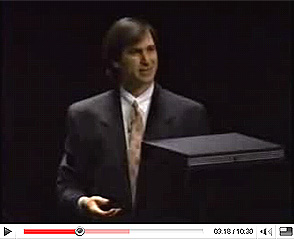
Video - Steve Jobs Introduction of the NeXTstation
         on September 18th, 1990


Apple Macintosh Performa 466 / LC III+
Built 1993, purchased used in 2009.
 

          CPU:  Motorola 68030 33 MHz


          RAM:  20 MB (expandable to 36 MB)


     Storage:  Quantum CTS160S 160 MB SCSI hard drive
                    1.4 MB floppy Superdrive.


   Graphics:  640 x 480 x 256 colors with standard 512K of VRAM;

                    with optional 256K VRAM expansion up to 832 x 624

                    x 65,000 colors.


      Monitor:  Apple Color Plus 14" Trinitron CRT, 640 x 480 fixed resolution.


         Audio:  Mono 8-bit 22 KHz with built-in speaker, also external speaker

                     and microphone jacks.


Connectivity: One internal LC III Processor Direct expansion Slot,

                     one external SCSI port and
                     two serial ports.  System came with a Mac-
                     compatible
Smart One 14.4 data/fax modem.


           O/S:  Mac System 7.1P6


This system was sold under the "Performa"  mass market label, but under the skin is a Macintosh LC III+ with a larger hard drive.  The "LC" line inaugurated a low-profile "pizza box" style case which was used for several Mac generations.  This "III" version fixed most of the issues of the original LC line -  it has a true 32-bit bus, expandable video memory and a decent-sized hard drive.


System 7, the operating system version supplied with this machine, was a major step up from previous editions.  It featured full-time co-operative multitasking, TrueType fonts, a full-color interface and a built-in scripting language among many other improvements.


The system I acquired has the well-known "After Dark" screen saver installed.  This was a very popular program back in the early Nineties, with its flying toasters imagery becoming something of a computer cultural icon of the time (see screen shot at right).


With this machine, I now have eight systems with CPUs from the Motorola 68xxx line.  This is exceeded only by the nine different computers I have that all use a variant of the MOS Technology 6502 CPU.  The LC III+ was one of the last Apple computers to use a 68xxx chip; two years later Apple switched to the PowerPC platform (see the entry for my PowerMac 9500, below). In 2006 Apple switched platforms again, this time to Intel x86 processors. In 2020 Apple changed to their own ARM-based CPUs, designated the "M" series.


 Additional Links:
 

          Apple History - LC III+/Performa 466 page
 

          Apple - Macintosh Performa 466 Specifications


Larger version


Mac OS 7.x screen shot (from Wikipedia)
Larger version


After Dark screen saver (from Wikipedia)
Larger version


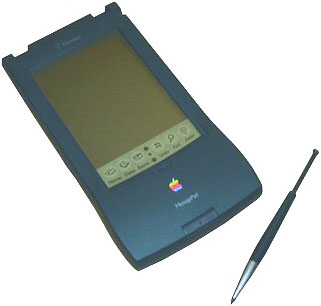
Apple Newton MessagePad 110
Built 1994, acquired
brand-new (still in the box) as a gift from a friend in 2001.


           CPU:   ARM 610 20 MHz


          RAM:   1 MB


      Storage:  4 MB ROM


       Display:  320 x 240 monochrome touch-screen LCD


Connectivity:  PCMCIA Type II expansion slot, infrared sensor,

                      Appletalk / Serial port.


             OS:  Newton OS

 
This was the second edition of the Newton, released in 1994.  The Apple Newton was generally regarded as the first practical touch-screen PDA. The Newton product line was discontinued in 1998, after Steve Jobs returned to Apple.

    Additional info:  Wikipedia Newton Page

                             Video - Apple Newton Ad (circa 1994)

                           Spec sheet


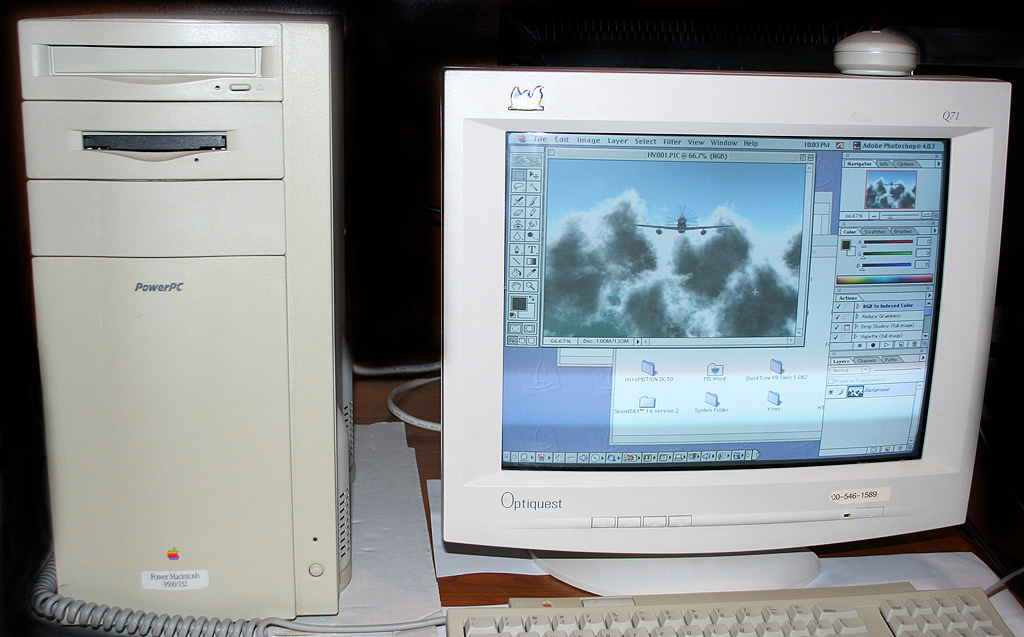
Apple PowerMac 9500
Built in 1995, purchased used in 2000.


          CPU:  PowerPC 604 132 MHz


          RAM:  330 MB (12 DIMM slots, officially expandable
                     to 768 MB, unofficially to 1,536 MB).


     Storage:  Quantum Atlas 4.5 GB SCSI hard drive (originally came

                     with a 2 GB drive).

                     Apple CD-ROM 4x drive.

                     Apple 1.4 MB floppy Superdrive.


   Graphics:  ATI Rage 128 Xclaim VR All-In-Wonder combination 3D graphics,

                    TV out and video capture card with 16 MB VRAM, capable of
                     up to 1920 x 1080 pixels and up to millions of colors (depending

                     upon resolution).


         Audio:  Stereo 16-bit, with built-in speaker and external microphone &

                      speaker jacks.


Networking:  10 MBps Ethernet with both standard 10BASE-T and Apple

                     proprietary AAUI connectors.


Connectivity:  6 PCI slots (one used by the video card), 2 serial ports,

                      SCSI & ADB ports.


      Special   
  Hardware:  Miro DC30+ video capture PCI card


           O/S:  Mac OS 8.6


Along with the follow-on model 9600, this was the last of the super-expandable PowerMacs, with no less than 6 PCI card slots and 12 (!) memory slots.  It was the first Mac to use industry-standard PCI bus (all previous models had used proprietary expansion card slots or had no slots).
 

In 1995 this was Apple's top-of-the-line system with a retail price of $5,000 plus ($10,000 in 2025 dollars).  In 2000 when I purchased this machine, the 9500/9600 series was still popular with Mac enthusiasts who needed the expandability these systems had for specialized tasks such as high-end audio & video post-production.

This model has it’s CPU on a plug-in card; third-party vendors made G3 and G4 CPU cards that can be used to upgrade this machine to newer processors.


The Miro DC30 video capture card was originally in my Dell XPS Dimension Pentium PC; when I gave away the Dell to a cousin who needed a computer I moved the card to my Mac. The DC30 was one of the first video capture cards that could both capture &output high-quality analog video.


This was the first Macintosh I ever owned; in five years of use I had to replace the power supply, video card and hard drive which all suffered fatal breakdowns; part of the perils of keeping an old computer runningIn 2006 I acquired a used G4 PowerMac and so this machine has been retired to my ‘antique’ collection.


  Additional info:
             Wikipedia Power Macintosh 9500_Page


Larger version


(From Wikipedia)  Larger version


Mac OS 8.x screen shot (from Wikipedia)
Larger version


Sega Saturn Game Console
Manufactured circa 1995,
purchased used in 2008.
 

         CPU:  Dual CPUs - Hitachi SuperH2 28.6 MHz 32-bit RISC with 4K cache


         RAM:  2 MB internal, expandable via cartridge.


  Graphics:  Two custom Video Display Processors, 704 x 480 max resolution,

                   millions of colors.


       Audio:   Stereo 44 KHz 16-bit


    Storage:  CD-ROM 2X drive, also slot for optional 512K memory cartridge  


          O/S:  Proprietary


Connectivity:  Two game controller ports, serial port.

                      One game controller.

This machine was perhaps the most advanced of the "5th generation" game consoles.  Besides using 32-bit processing and optical discs, it also featured a multi-processor architecture.  There were two main CPUs, two video processors, a dedicated processor for the optical drive and two for sound.  The main CPUs shared memory but the others had their own small individual memory areas.


Unfortunately the programming tools at the time did not do a good job of supporting this type of architecture and so the capabilities of the hardware were often not fully utilized by games. However multiple processors was the way of the future; a decade later both the Xbox 360 and Playstation 3 consoles were multi-processor systems.

The Sega's CD drive was used for game discs, but could also play regular audio CDs.  It also supported "CD+G" discs which combined music with graphics (mostly used for karaoke).
            
Additional Info: 
             
Wikipedia Sega Saturn Page


Larger version


Game "Virtua Fighter" - Larger version


Toshiba Satellite 110CT, 11.3” LCD screen
 
Purchased new in 1997.  Spec sheet.


        CPU:  Pentium 100 MHz 16 KB cache


        RAM:  40 MB (max capacity)


   Storage:  Internal 800 MB HD.
                   External IBM CD-ROM drive / sound unit (this drive has attachable

                   stereo speakers and can also function as a standalone battery-

                   powered CD music player).


    Display:  11.3 " Active Matrix TFT-LCD 800 x 600 16-bit color


  Graphics:  C&T CT65548 1 MB VRAM up to 1024 x 768 x 256 colors

                   when connected to external display.


Connectivity:  PC-Card slot, serial and parallel ports.


          O/S:  Windows 95


This was my first laptop computer.  At $2,400 ($4,800 in 2025 dollars) it was one of the first "affordable" machines to have an active-matrix (instead of passive) LCD screen; previously such a feature was confined to portables costing far more.  It was also one of the first laptops capable of displaying thousands of colors.


As computers with optical drives and good audio became more wide-spread, the lack these capabilities in this machine started to be a problem; around 1999 I purchased the IBM external CD drive, which also added audio functionality.


Larger version


Windows 95 desktop
Larger version

Nintendo 64 Game Console
Manufactured circa 1998,
purchased used in 2008.
  

         CPU:  MIPS R4300i 64-bit RISC 93.75 MHz,

                    Silicon Graphics Reality Co-Processor,
                    MIPS Vector Processor 62.5 MHz.


         RAM:  4 MB internal (expandable to 8 MB with optional memory card)


    Storage:  Plug-in ROM game cartridges (maximum capacity 64 MB);

                    some cartridges also contained writable memory for game saves.
                    Optional external "Controller Pak" with 256K of memory

                    for saving game data.


  Graphics:  Up to 640 x 480 x 32,768 colors


       Audio:   Stereo 48 KHz 16-bit sampling rate


          O/S:  Proprietary


  Accessories:
                   Nintendo translucent Jungle Green controller.
                   Nintendo translucent Watermelon Red controller.
                   Third-party steering wheel and foot pedals for driving games.

The last and most powerful of the cartridge-based game consoles. Silicon Graphics (at the time a well-known maker of high-end graphical workstations) contributed a considerable amount of technology to the design.

Normally the Nintendo 64 was packaged in an opaque black case, but a limited number were made in various translucent colors.  The version I acquired was known as "Jungle Green".
            
Additional Info: 
             
Wikipedia Nintendo 64 Page
              Byte Magazine Article (December 1996)
              N64 System Diagram


Larger version


Super Mario 64 - Larger version
 Video - N64 Super Mario Game Play


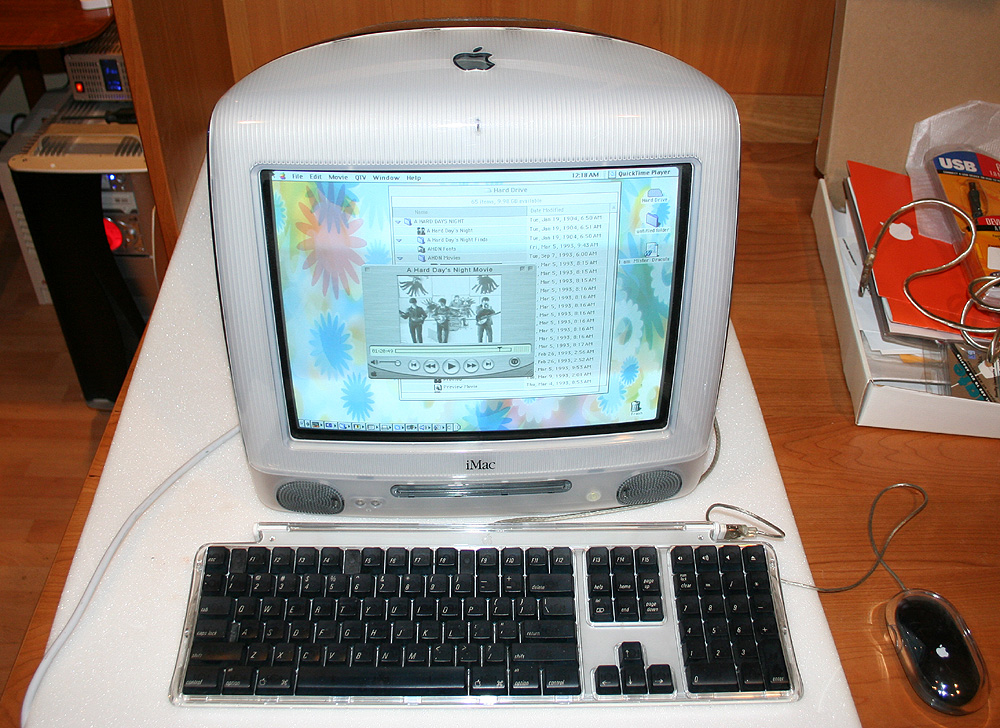
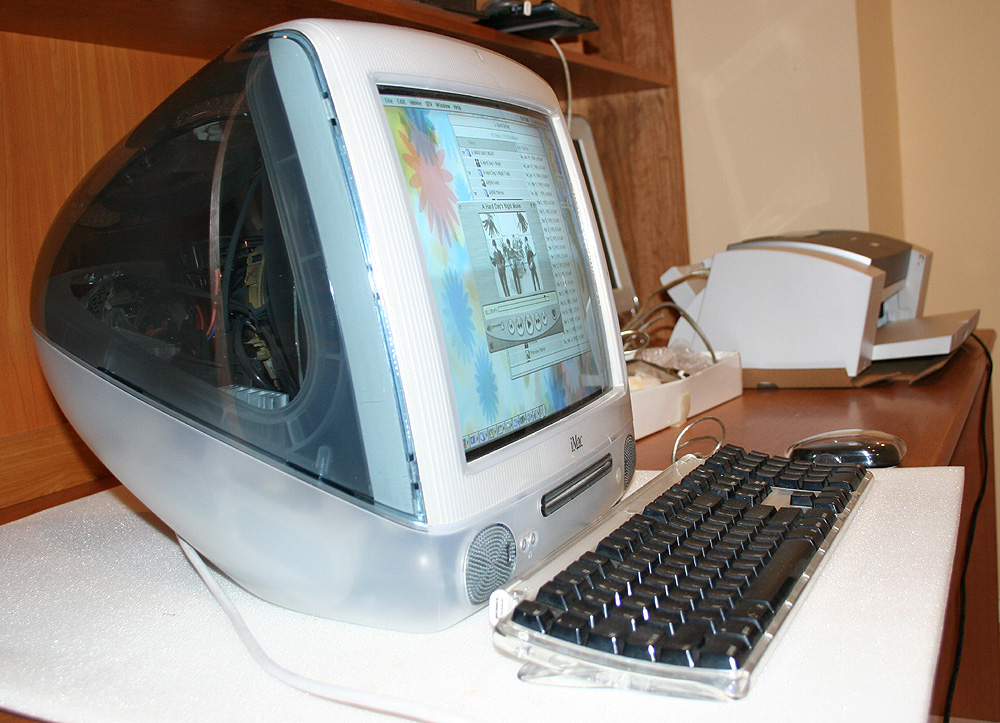
Apple iMac DV SE (Digital Video Special Edition).

Manufactured circa 1999, purchased used in 2008.
  

           CPU:  PowerPC G3 400 MHz 512K L2 cache


           RAM:  256 MB (expandable to 1 GB)


      Storage:  Internal 13 GB Ultra-ATA Hard Drive
                      Internal DVD-ROM 4x drive


    Graphics:  ATI Rage 128 VR 8 MB VRAM, up to 1024 x 768

                     and millions of colors.


       Display:  Built-in 15" CRT (13.8" viewable)


          Audio:  Stereo 48 KHz 16-bit sampling rate, built-in Harmon Kardon

                      speakers andmicrophone.


 Networking: 10/100 Ethernet, 56K Modem, available slot for Airport card (WiFi).
 

Connectivity:
  Firewire, USB 1.1 and VGA ports.


             O/S:  Apple OS 9.2, supports up to OS X 10.4.


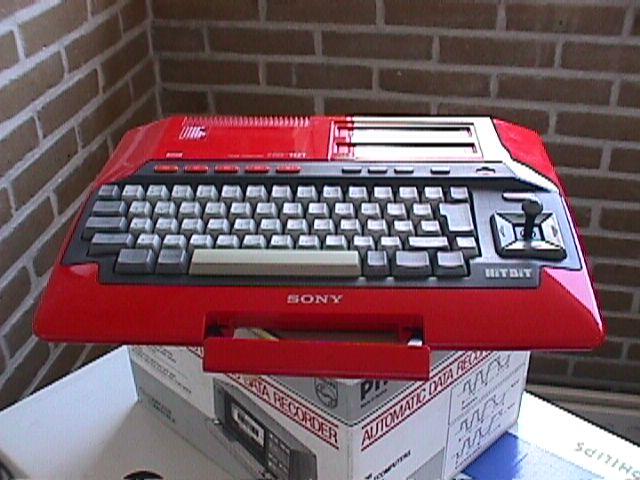
In 1998 Apple made a big splash with the introduction of the original "iMac".  This computer was available in a variety of translucent colors, a radical departure from the bland beige boxes being made by other computer manufacturers.  To be fair, back in the Eighties a line of computers based upon the 'MSX' plat
form were made in a number of glossy colors, but these machines were sold only in Asia.

This particular model was the high-end iMac for 1999-2000.  In 2002 Apple discontinued the CRT-based iMacs and at the same time sadly dropped the translucent multi-color design motif; from that point on iMac cases became opaque and monochromatic.
 

  Additional Info:
           Low-End Mac Profile on the iMac DV SE


Larger version


Larger version


Video - Steve Jobs introducing the original iMac (1998)


Three Sega Dreamcasts
Manufactured 1999, purchased used in 2008.

          CPU:   Hitachi SH-4 200 MHz CPU


     Memory:  16 MB main memory, plus 8 MB video RAM, 2 MB for sound

                     (not expandable).


     Storage:  Yamaha GD-ROM drive, 1.2 GB capacity.

                     Sega Visual Memory Units ("VMU"s) with
                     128K memory each for game saves, etc.


   Graphics:  PowerVR2 chip, 640 x 480 x 16 million colors.


        Audio:  Yamaha AICA Sound Processor (22.5 MHz 32-bit ARM7

                    RISC CPU), stereo output.


Networking:  Integrated 56K analog modem


           O/S:  Custom version of Microsoft Windows CE


Accessories acquired with these systems:


                    4 Sega game controllers white opaque

                    1 Sega game controller blue translucent

                    1 Sega "Millennium 2000" game controller,
                       green translucent

                    1 Nyco game controller purple translucent

                    1 Intec game controller white opaque

                    1 Performance game controller blue opaque

                    1 Interact game controller white opaque
                    3 InterAct Starfire light guns
                    7 Sega Visual Memory Units

                    6 Performance Tremor Paks

                    1 Microphone

                    1 Gameshark CDX "Game Enhancer"
 

A very advanced game system for its time; some of the hardware, like the Visual Memory Units ("VMU"s), were more sophisticated than what is available for today's game consoles.


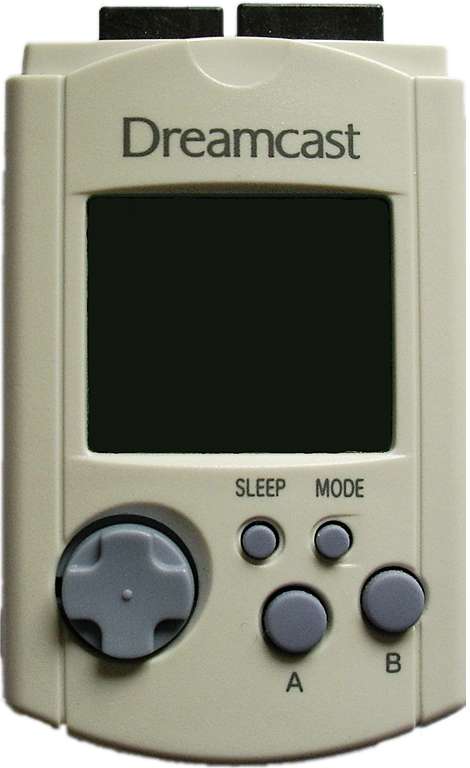
The VMUs are fascinating little gadgets (see close-up photo at right); they plug into the game controllers and  feature a small LCD screen and built-in memory for game saves.  The LCD screen is used to display images downloaded from the current game being played on the console.  The VMUs can also be unplugged from the controllers and used standalone to run mini games; besides the LCD screen, each VMU has a tiny 4-axis controller and game control buttons  ("A", "B" plus Mode).


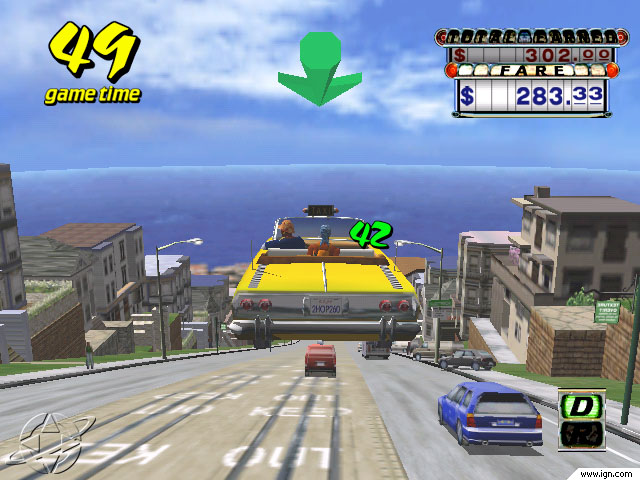
I acquired 16 games for this system, including "Crazy Taxi" (see screenshot at right), "Shenmue", "Resident Evil Code Veronica", and "Seaman".


Home-brew folks have figured out how to run Linux and the Windows CE Toolkit on the Dreamcast.

     
      Links:  Wikipedia Dreamcast Page

                  RacketBoy Dreamcast Page
                  Dreamcast Online Page


Dreamcast Console and controller  - Larger version


Dreamcast VMU  - Larger version


Scene from Dreamcast game "Crazy Taxi"  - Larger version
 

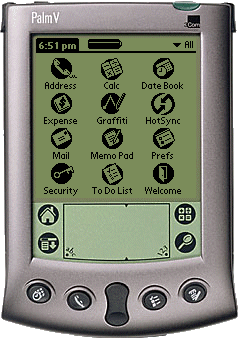
Palm Vx PDA
Made circa 1999, purchased used in 2009.

           CPU:  Motorola Dragonball 20 MHz CPU


    Memory /
      Storage: 
8 MB


       Display:  3.2 " 160 x 160 4-bit (16 shades) grayscale touch-screen


      Special
   Hardware:  Infrared sensor, rechargeable Li-ion battery.


Connectivity:  RS232 serial port


             OS:  Palm 3.3

 
Picked this up used for around $20 (ten years ago it retailed for $299) complete with sync / charging cradle and the install disc. This unit is sleeker and lighter than my Visor PDA (see below) which is from the same era. However, the Visor came with a hardware expansion
 slot
which was not present on the Palm models.

      Links:  Wikipedia Handspring Page


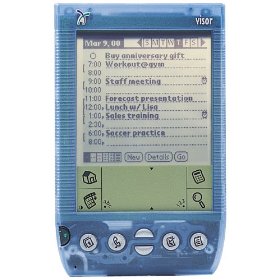
Handspring Visor Deluxe PDA
Purchased new in 2000.

           CPU:  Motorola Dragonball 20 MHz CPU


    Memory /
      Storage: 
8 MB


       Display:  3.2 " 160 x 160 4-bit grayscale touch-screen


       Special
   Hardware:  Dock with serial port,

                      Infrared sensor
                      'Springboard' expansion slot
                      Magellan GPS module.


             OS:  Palm 3.1


This Palm-compatible PDA has a special slot for add-on modules.  I have one of these ‘Springboard’ modules, the Magellan GPS (Global Positioning System) receiver purchased in 2002.

      Links:  Wikipedia Handspring Page


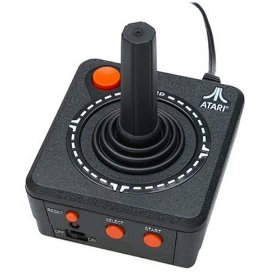
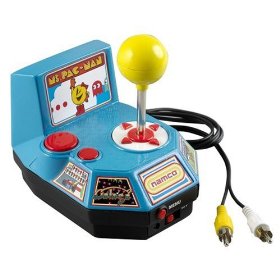
Jakks "Plug-and-Play" TV Game Machines.
Made circa 2003, purchased used in 2008 ($5 each).
 

These devices resemble joysticks but in fact are complete game machines, with a CPU, memory and a number of classic games built-in.
 

There is little technical info available on these devices, but since they reportedly emulate an old Atari 2600 game console, below are the minimum specifications based upon the 2600 architecture:


           CPU:  Emulated 6507 1 MHz CPU 8-bit 1.19 MHz


    Memory /
      Storage:  At least 128 bytes of RAM, up to 4,096 bytes of ROM storage

                      per game.


    Graphics:  160 x 192 x 128 colors, analog NTSC Color output.


         Audio:   Mono analog


       Special
   Hardware:  Powered by internal AA batteries (no external power supply

                      supported). Joystick controller built-in.


             OS:  Proprietary


 Games:


   Ms Pac-Man TV Game Machine:   

      Ms Pac-Man           Galaga              Pole Position

      Mappy                     Xevious
                                                          
   Arcade Classics TV Game Machine:

     Pac-Man                  Galaxian           Bosconian
     DigDug                    Rally-X
 

   Atari Classics 10 in 1 TV Game:   

      Adventure               Asteroids              Breakout
      Centipede               Circus Atari          Gravitar     

      Missile Command                               Pong
      Real Sports Volleyball                         Yars' Revenge
 

   Links:  Wikipedia TV Game Page


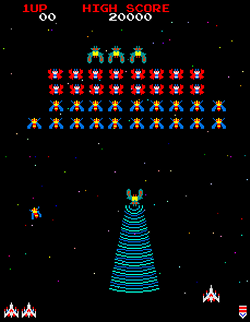
Galaga game
 

Motorola T730 Cell Phone
Acquired circa 2004.
 

           CPU:  Qualcomm MSM5100 System-On-Chip 32-bit

                     based upon ARMv4 architecture.


           RAM:  400 KB


      Storage:  1.5 MB flash memory


   Graphics /

       Display:  160 x 120 pixel screen, 4096 colors,

                      plus 96 x 32 pixel front screen, monochrome.


         Audio:  40-level MIDI and Yamaha MMF polyphonic sound.


 Networking:  CDMA / Data 1xRTT


             OS:  BREW 1.1

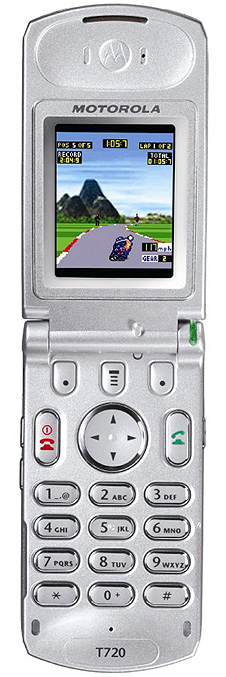
Received as a warranty replacement for my old T720, which I originally purchased new back in late 2002. This unit, one of the first of the ‘2G’ phones, qualified as an actual computer due to it’s ability to download and run applications written in the “BREW” programming language.  This phone could also send and receive email, browse the web (text only), store photographs and sound (voice notes), dial numbers via voice command, store five-hundred names & phone numbers, keep track of appointments and also can function as a numeric calculator.  Caller-ID and GPS are also built-in.
  

NOTE: Photo is of a T720, I could not find a high-res image of the T730. Cosmetically these two models are almost identical.


Some trivia - I have owned twelve cell phones since 1989:

    1989 - Panasonic “convertible” (gigantic car/portable model)
    Mid-Nineties -  Nokia (same model Mulder carried in the X Files).
    Late Nineties - Motorola Startac
    2002 - Motorola T720
    2004 - Motorola T730
    2005 - Motorola V710
    2007 - Samsung SCH-i760

    2010 - Samsung Galaxy S

    2012 - Samsung Galaxy SIII

    2016 - Samsung Galaxy Note 7 (recalled)

    2016 - Apple iPhone 7 Plus

    2024 - Apple iPhone 15 Pro Max


The Nokia and T720 were traded in for newer models. The Note 7 was recalled due to a battery fire issue, the others I still have.


Go on to the Obsolete Systems page


Go on to the Current Systems page

Go back to the Computer Collection page
 

Comments? Email me at mikegt@svas.com.